Cider
Cider
In the autumn of 2021, in one of the quietest and cleanest cities on our planet, I picked up more apples than I could eat and thought about what to do with them — so the idea came up to make my own cider.
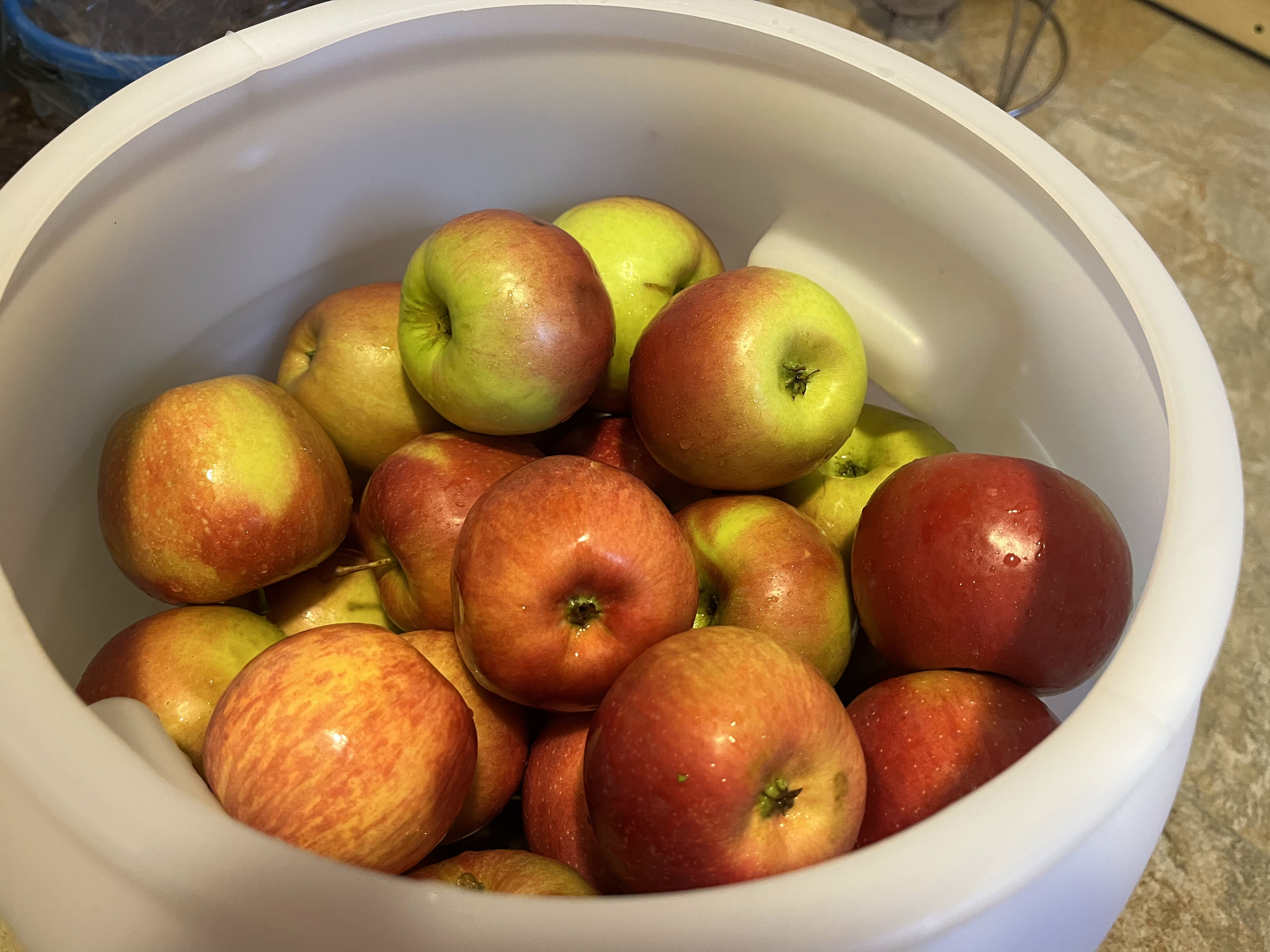
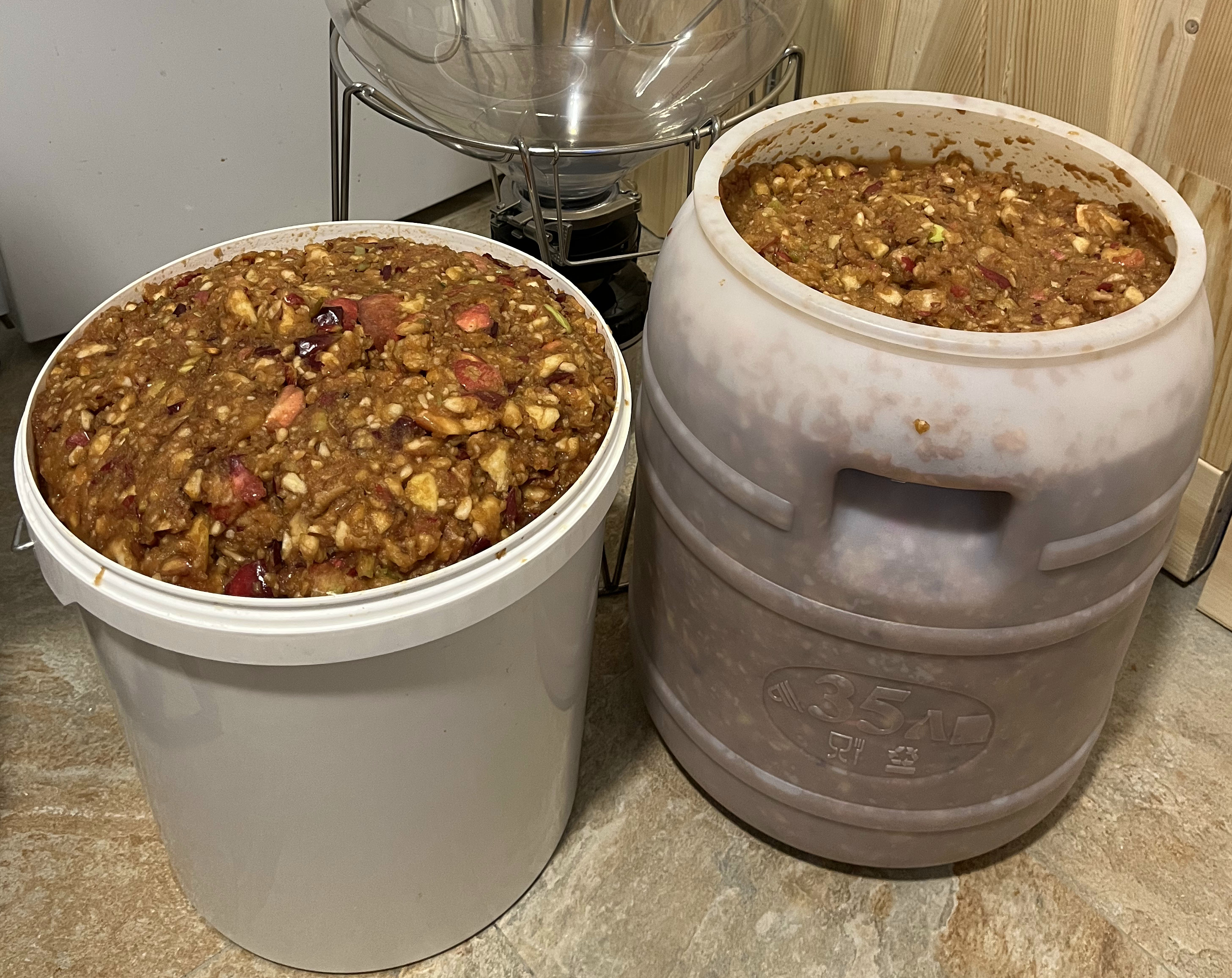
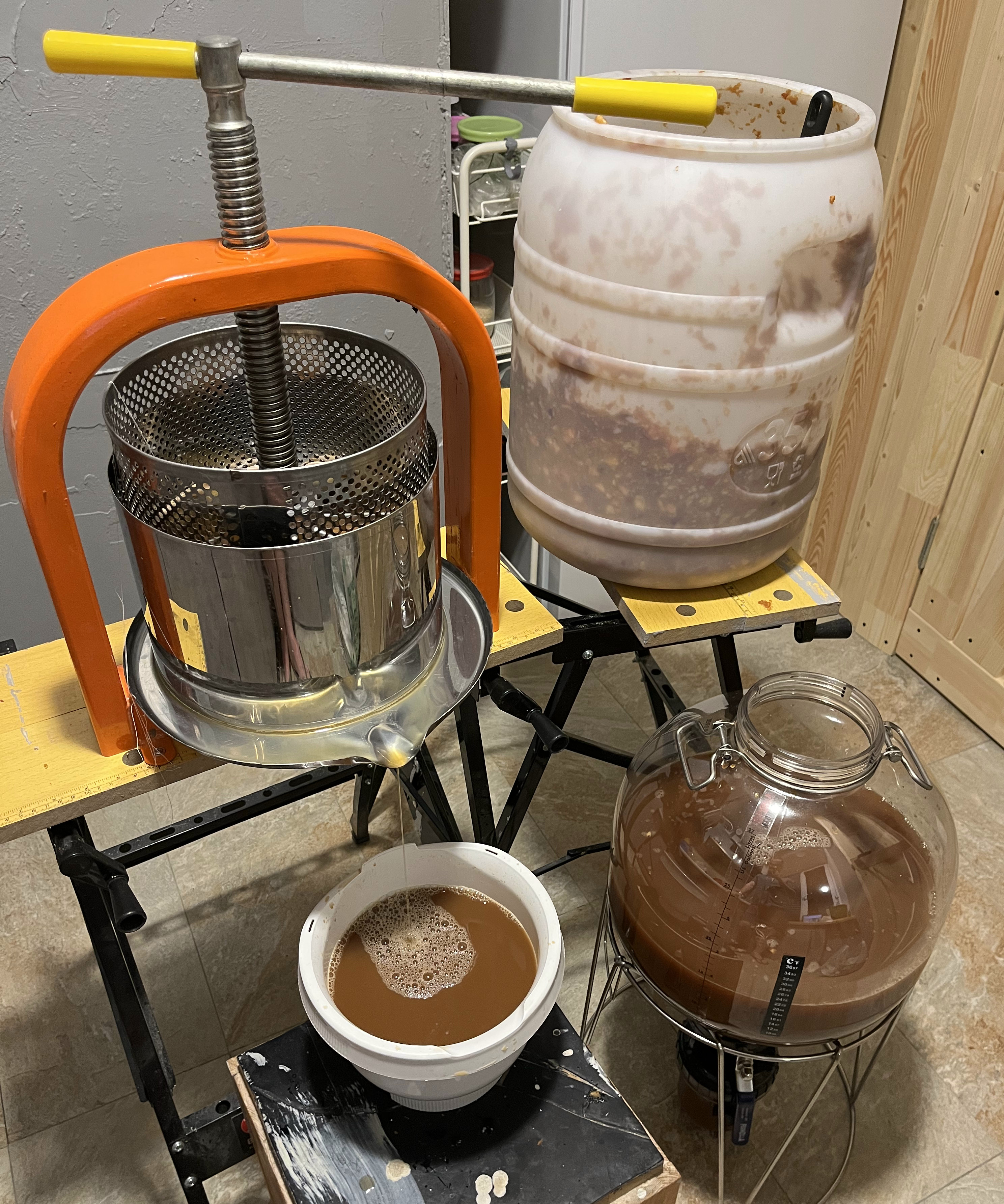
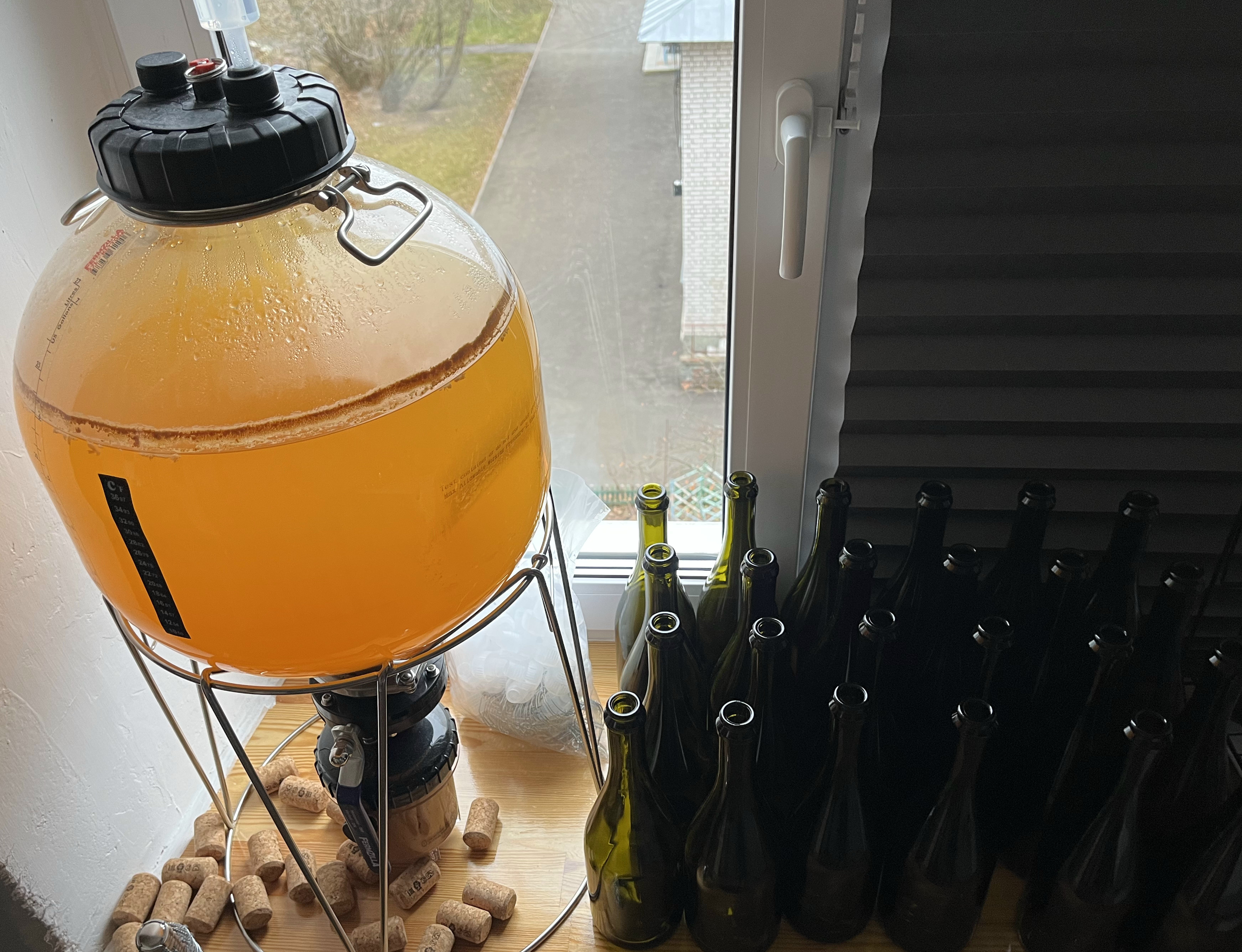
I am advised by my colleague from Normandy, whose farming family has been producing cider and calvados for many generations without changing old technologies. I select apples of different varieties primarily to improve the taste and aroma, as well as to obtain the desired acidity and sugar content. Apples are pre-cut semi-mechanically and then manually pressed with a screw press. All used containers and tools are made of materials approved for food contact.
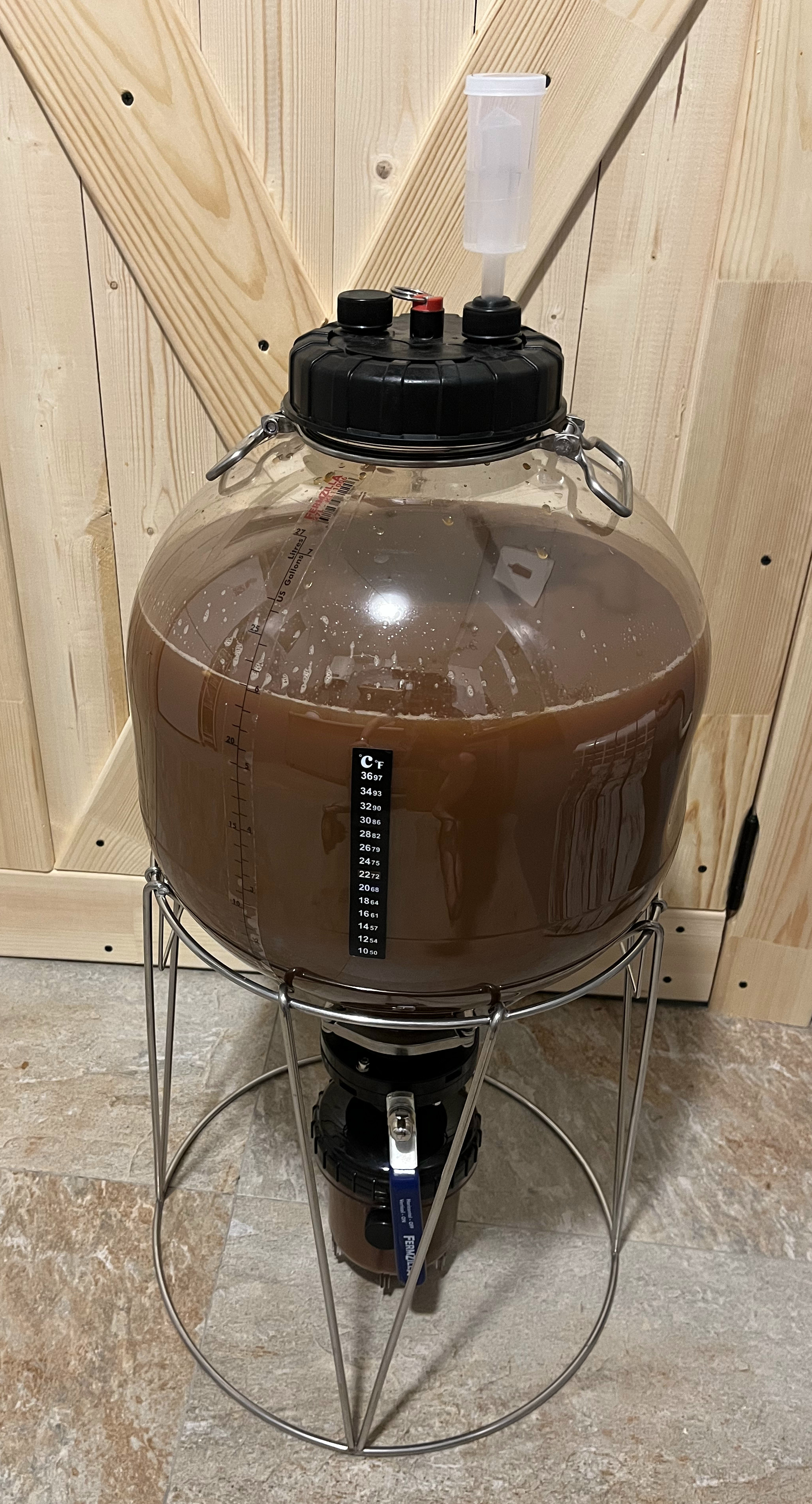
For a clean and fast fermentation, I use Gervin yeast from Muntons, a British family company with over a century of experience, or SafCider from Fermentis, a company which is focused for over 160 years on yeast production.
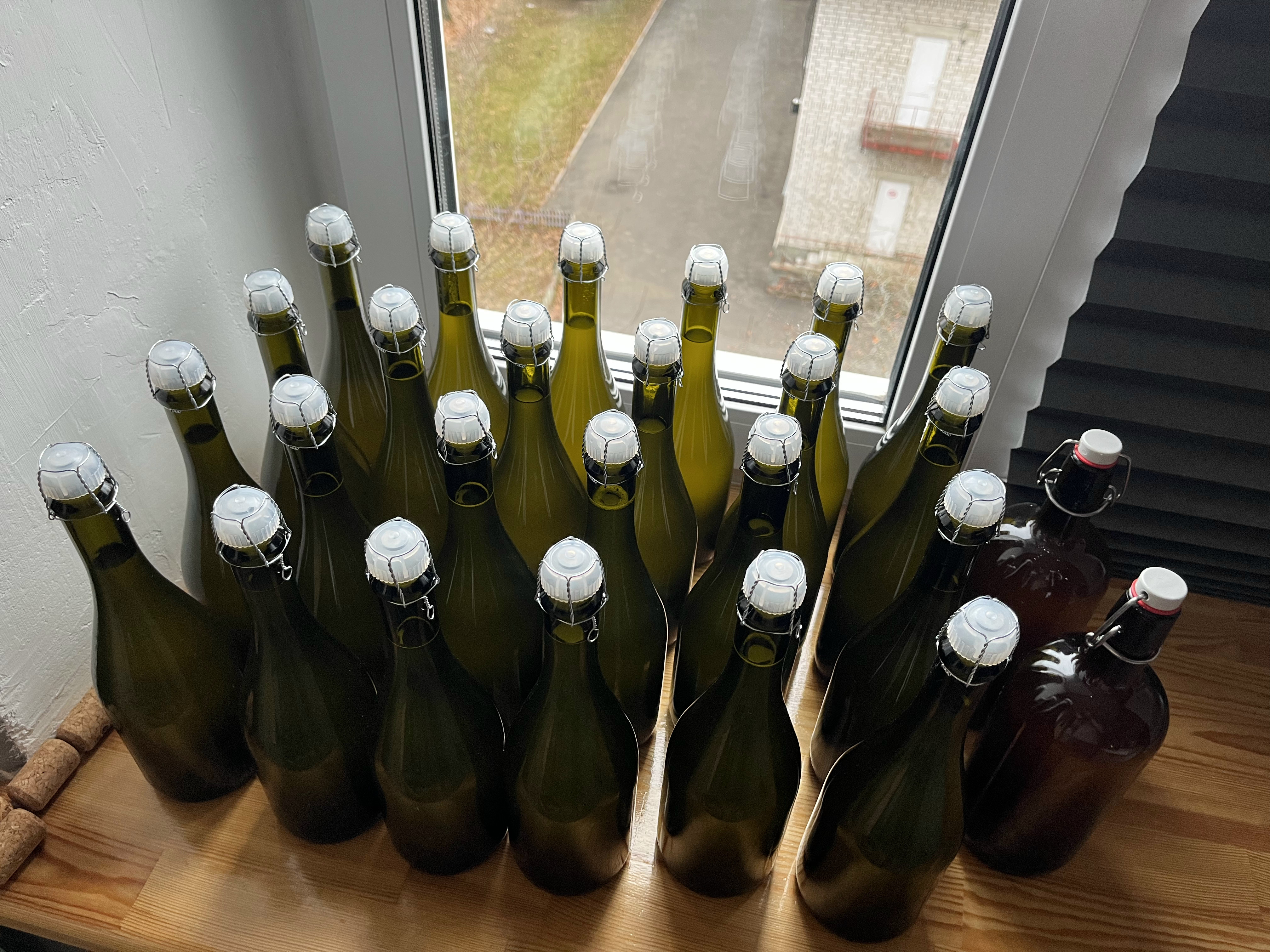
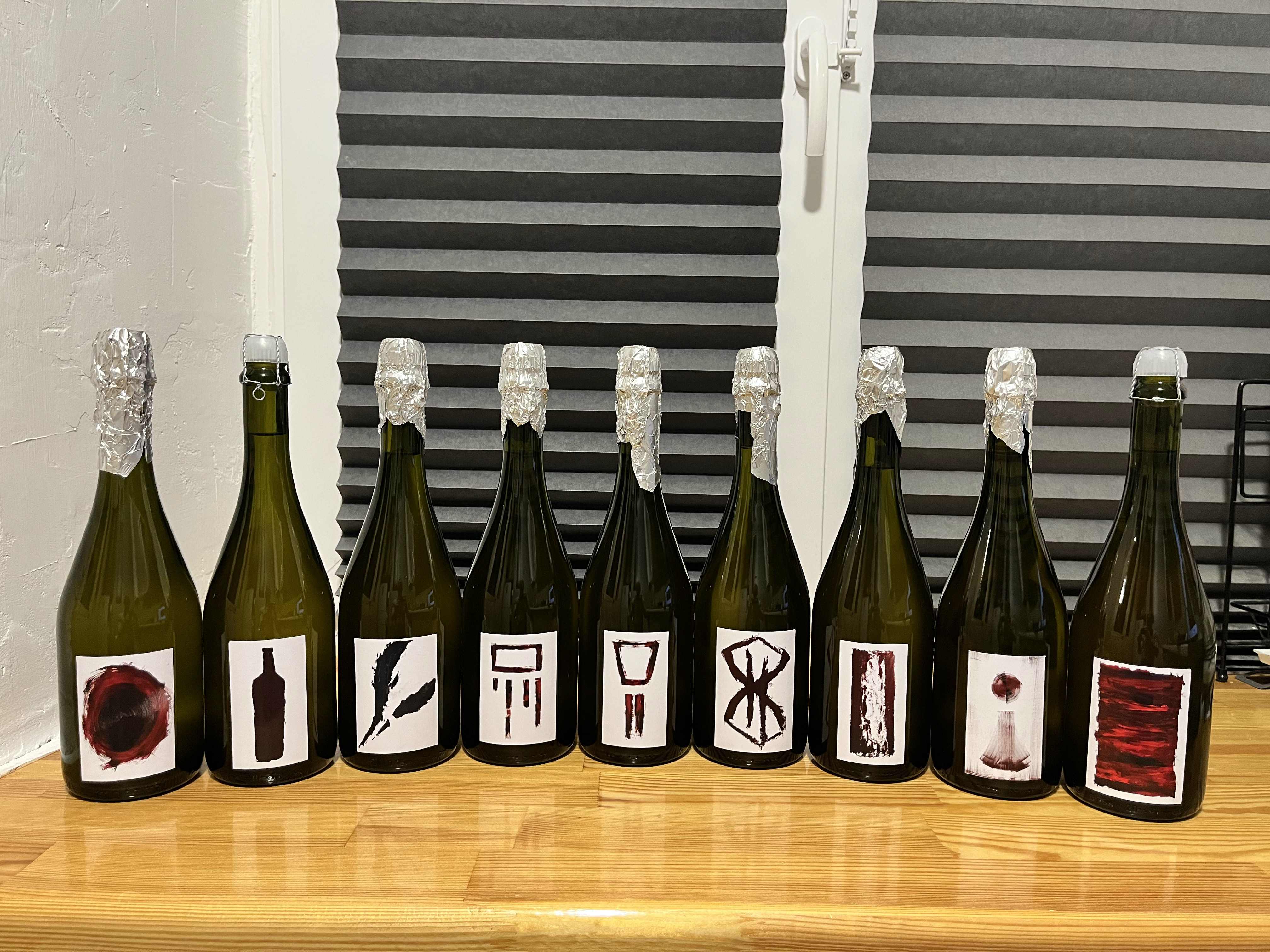
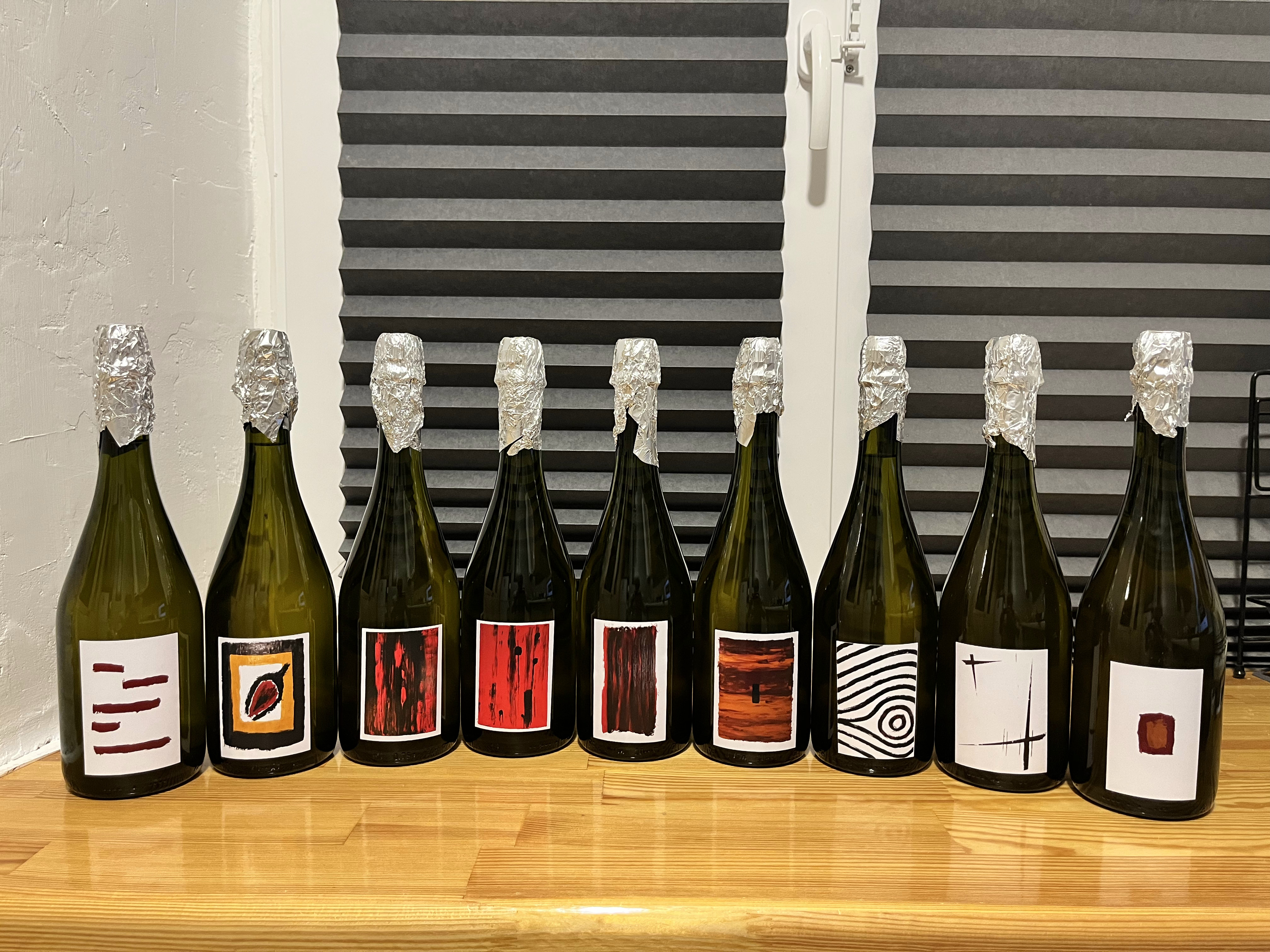
After the primary fermentation, the cider is bottled in sterile bottles for the final maturation — the secondary fermentation. Such live, unpasteurized, unfiltered cider is stored at 5 to 14 degrees Celsius in a special refrigerator or cellar.